E-mobility drive: Kenya Power to install 45 EV charging stations across six counties
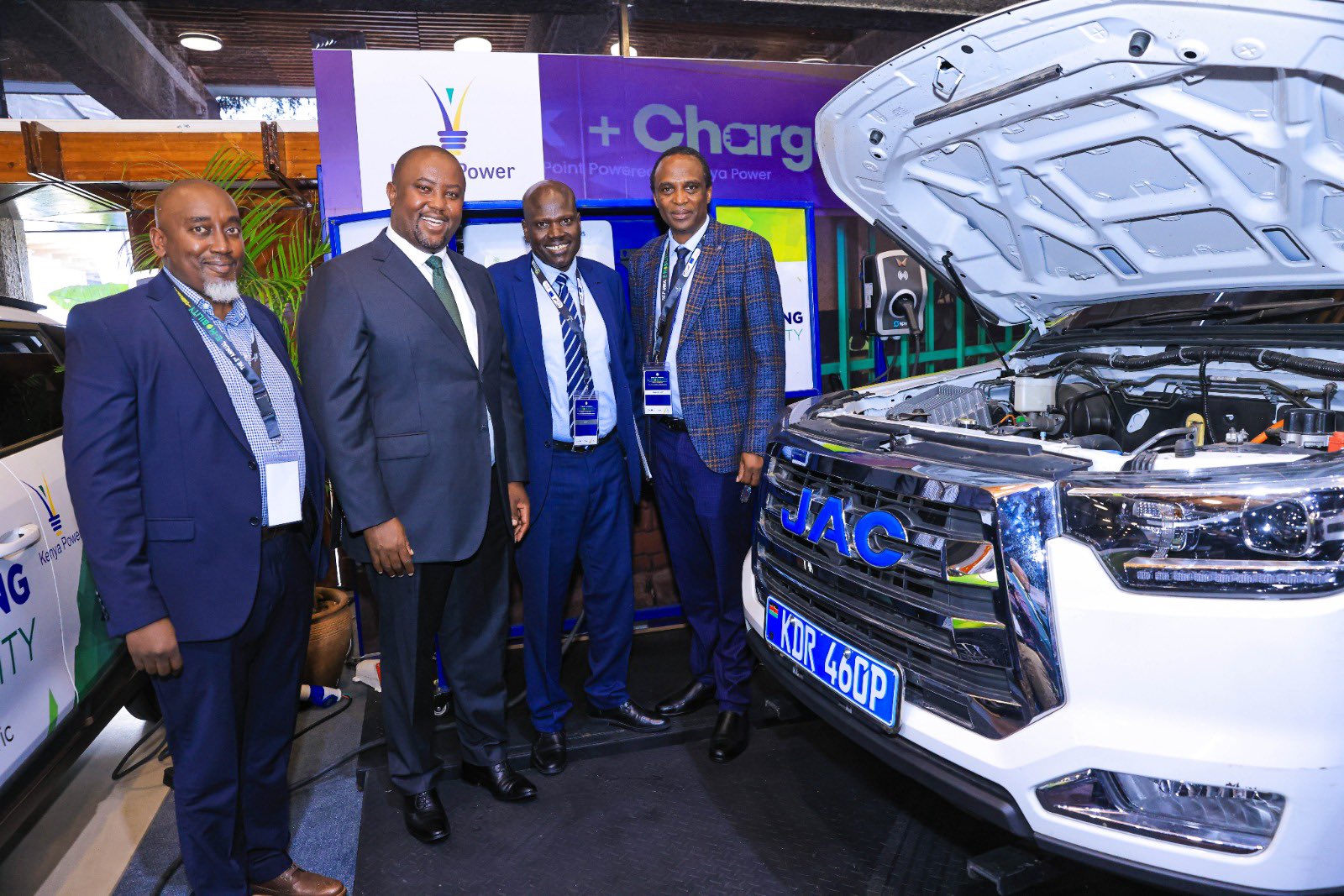
Additional chargers will be set up in Nyeri, Kisumu, Eldoret, Nakuru, Mombasa and Taita Taveta Counties, with six strategically placed within the Jomo Kenyatta International Airport (JKIA).
Nairobi is among six counties where Kenya Power plans to install 45 Electric Vehicle (EV) chargers over the next six years, in a bid to boost the growth of the local e-mobility sector.
Additional chargers will be set up in Nyeri, Kisumu, Eldoret, Nakuru, Mombasa and Taita Taveta Counties, with six strategically placed within the Jomo Kenyatta International Airport (JKIA).
More To Read
- Construction of Kenya’s first PPP-funded transmission lines set for August 2026
- Kenya Power faces critical staff shortages as over 2,700 employees to retire by 2026
- Kenya sets ambitious energy expansion with new national policies and transport financing
- Consumers to get more units for less as electricity tariffs decline
- Auditor General flags Kenya Power for missing 30 per cent tender quota for youth, women, and PWDs
- Kenya’s electricity demand hits all-time high of 2,439 MW, straining power generation capacity
Once completed, this will bring the total number of EV chargers in Nairobi to nine.
Kenya Power Managing Director Dr. (Eng) Joseph Siror announced this during the opening of the 3rd Annual E-mobility Conference and Expo, noting that the stations are intended for both the company's electric fleet and the growing base of private Electric Vehicles (EV) users across the country.
"These EV charges, equipped with fast charging technology, are designed to serve both our fleet and the growing number of private EV users. We are investing in local manufacturing to make e-mobility affordable and accessible," he said.
He added that Kenya Power is also exploring ways to bring battery production closer to home, to reduce reliance on imports and lower the overall cost of transitioning to electric vehicles.
"In partnership with Kenya Industrial Research and Development Institutes, we are exploring the establishment of battery assembly plants. Local production of EV batteries will reduce cost, create jobs and position Kenya as a hub for e-mobility in Africa," he said.
According to the Energy and Petroleum Regulatory Authority (EPRA), the number of EVs in Kenya rose to 5,294 by the end of 2024, up from 3,753 in 2023, marking a 41.06 per cent increase.
Similarly, the total electricity consumption in the sector grew by 480.65 per cent to 1.80 gigawatt-hours in 2024, compared to the previous year.
"This growth can be attributed to government initiatives such as the introduction of a special electric mobility tariff, a reduction in excise duty on electric vehicles from 20 percent to 10 percent, the exemption of fully electric cars from value-added tax, and the expansion of charging infrastructure," said EPRA in a March report.
Top Stories Today